A teacher thank-you becomes useful when it shows what their work helped someone do. “You are the best teacher ever” is enthusiastic but vague. “You let her demonstrate the steps before asking her to explain them” gives the teacher a recognizable moment. You can express appreciation without claiming that one adult transformed a child’s entire life.
A simple structure for a school note
Start with the setting: this term, the first week, a particular project. Name one action. Finish with what changed for the learner. A parent can write about what they observed, while a pupil can write in their own voice. Do not present a child’s feelings as fact unless they told you.
Preschool and daycare
For a preschool teacher: “Thank you for giving Sam a small job at the start of each morning. Carrying the book basket helped him walk into class with something familiar to do. We appreciated that gentle welcome.” For daycare: “Thank you for the daily handover notes. Knowing which games she enjoyed helped us talk about her day at home.” These messages value care and communication without comparing staff or revealing another child’s information.
Teaching assistants
Thank you for breaking the worksheet into one question at a time. I noticed how much easier it was for him to get started when the whole page no longer felt like one huge task. Your patient explanations made a difference to our afternoons.
If you do not know which staff member provided a particular adjustment, thank the team rather than guessing. Include the assistant’s name when you are sure, especially in a note copied to a school leader.
Dance teachers
“Thank you for helping me work through the turn I kept missing. Slowing it down and showing me where to look gave me something clear to practice.” A recital note could say: “Thank you for preparing the group so calmly before the performance. She came home proud that she remembered the sequence.” Avoid remarks about bodies or weight; describe practice, confidence, teamwork, or a specific skill.
Art teachers
“Thank you for showing me how to try a second sketch instead of treating the first one as a failure. I used that approach again on my own project.” For a child: “The color-mixing experiment stayed with him; he wanted to repeat it at home. Thank you for making the lesson something he could explore.” There is no need to call every finished picture a masterpiece.
A message from the learner
Thank you for explaining [the task] in a way I could try for myself. I was pleased when I managed [a real step]. I also appreciated [something about the lesson]. I will remember [one useful idea].
Let a child choose the detail and keep their natural phrasing. Correcting every informal word can turn their card into an adult performance. A drawing with one sentence can be more personal than a long typed letter.
Timing, gifts and privacy
A note can be sent at the end of a term or after a meaningful lesson; it does not need to wait for an official appreciation day. Check the setting’s gift rules before organizing a collection. When sharing publicly, get consent for names and photographs. A private note can include a sensitive learning detail that would be inappropriate on a public review page.
A teacher note based on one classroom detail
A useful note tells a teacher which part of their work you appreciated. Start with a moment you can describe truthfully: a clear explanation, a patient restart or a chance to practise. A small detail is enough. There is no need to claim an exceptional transformation, speak for every family or compare one member of staff with another.
Find the detail before choosing a compliment
Ask the learner, “What did the teacher do that helped you try again?” They might name a demonstration, extra thinking time or a question that made the next step clearer. Use their own wording if they want to contribute. If they prefer a drawing, a spoken thank-you or no message at all, respect that preference. A card should not become another performance for the child.
Keep observation and interpretation separate. “You showed the steps on the board” describes an action. “Everyone now loves mathematics” makes a claim you probably cannot support. A parent can say what they noticed at home without presenting it as a measured classroom outcome. Where the helper's identity is uncertain, thank the teaching team instead of assigning the action to the wrong person.
A complete letter and its shorter version
Original fictional example: “Dear Ms Taylor, thank you for letting Alex explain the first part of the project before helping with the next step. When we worked on a similar task at home, Alex tried describing the plan aloud instead of stopping immediately. I appreciated the clear instructions you sent us, too. We are grateful for the care you put into making the work understandable. With thanks, Alex’s family.”
The note describes a specific teaching action and a family's observation. It does not claim a diagnosis, a class-wide result or a teacher's private intention. Replace the example's name, event and observation with details that genuinely belong to your situation; otherwise choose a simpler message.
Short card: “Thank you for showing me how to break the project into steps. I used the same idea when I tried again at home. I appreciated having time to practise.” The shorter version preserves the substance without repeating a long list of adjectives. A pupil can keep an informal closing if it sounds natural to them.
A private letter is different from a public review
Before posting, remove information about a child's difficulties, health, family circumstances or another pupil. A public message can thank the teacher for a clear demonstration without describing who needed additional support. Check whether a photograph, school logo, location or name reveals more than you intended. UNICEF's privacy guidance invites families to consider the audience and identifiable details when sharing about children; it is context for this check, not a template for school consent.
Do not hide a request inside the thank-you
If you also need to discuss a concern, arrange that separately. A thank-you does not oblige a teacher to accept a gift, answer outside working hours or change an assessment. Check the school's gift policy before adding money or organising a collection. Gratitude can be a brief private note with no purchase involved.
Final read-through
Read the message once for accuracy and once for tone. Can you identify the action, your real observation and a closing that asks for nothing? Let the learner decide whether their own contribution should be included. The local worksheet below joins only the details you enter; it does not generate testimonials, send a message or store a child's information. All examples on this page are editorial illustrations.
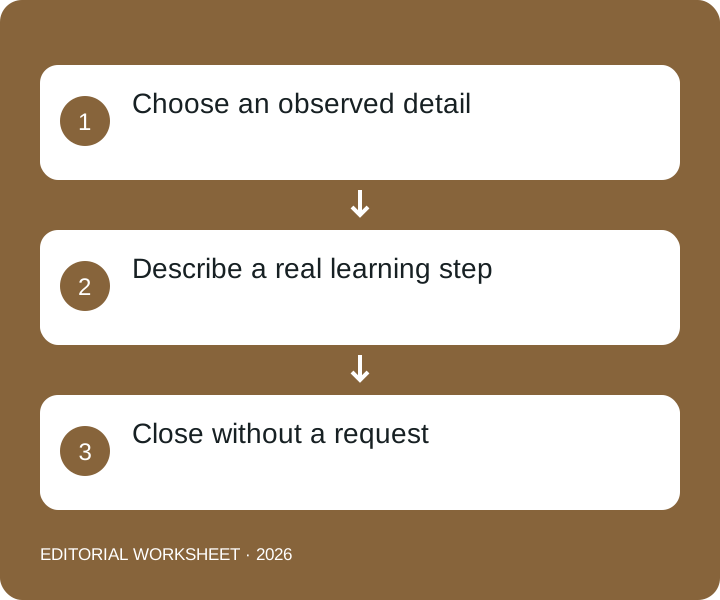
Text equivalent: Choose an observed detail → Describe a real learning step → Close without a request.
Prepare a local worksheet
Your text stays in this page. It is not sent, stored or checked for accuracy. Use anonymised examples.
Download blank worksheet and filled example ↓
Primary context and limits
Visual field note

Read the diagram as text
- Setting: The lesson or term
- Action: A teaching choice you noticed
- Learning: A concrete next step
Make it your own: Build a note from two real details in the local worksheet.
A group thank-you that does not speak for every child
One coordinator can collect suggestions without creating a list of children’s private experiences. Agree the wording and the signing group before sending. The two notes below are invented templates, not testimonials or statements from a real class.
- Ask for a small classroom detail that contributors are comfortable sharing with the teacher. Do not collect diagnoses, grades, family circumstances or children’s photographs for a thank-you.
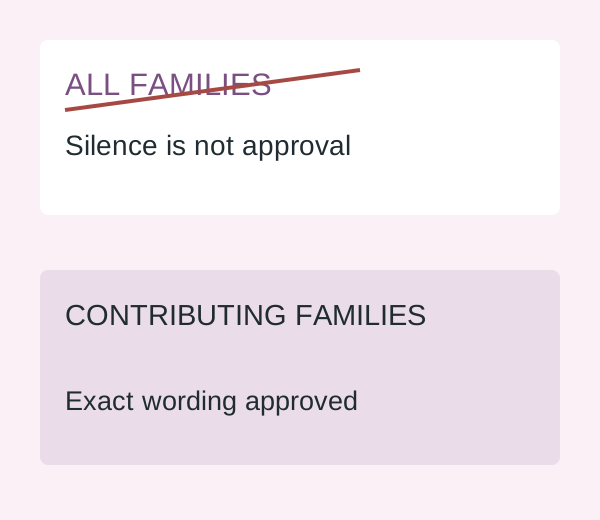
- Draft the note without attaching a roster. If not everyone has agreed, use “from the families who contributed” rather than claiming to speak for the whole class.
- Let contributors approve the exact final wording and how they will be named. A suggestion is not consent to publish a message or a child’s identity on social media.
- Choose one sender and one delivery route. Delete the coordinator’s unnecessary working copies after the agreed review period; follow school rules for any school-held records.
| Field | Example or check |
|---|---|
| Short note — contributing families | Dear Ms Lee, thank you for making the morning reading routine welcoming. We appreciated having a clear way to help with books at home. With thanks, the families who contributed to this note. |
| Note — consenting adult volunteers | Dear Mr Patel, thank you for giving us a clear plan for the class reading afternoon. The labelled book baskets made our volunteer jobs easier to follow. With appreciation, the parent volunteers who approved this message. |
| Fictional approval record | Draft G2; final wording circulated privately; sign-off covers “contributing families”, not a public class roster. Sender: one coordinator; destination: teacher’s school address. |
| If someone does not approve | Remove their name and any detail supplied in confidence. Keep the note from the consenting group; do not present silence as approval. |
| Blank coordination card | Audience __; permitted classroom detail __; agreed signing group __; final version __; approvals __; sender __; destination __; working-copy review date __. |
A specific, modest detail is enough. An expensive gift, a full class endorsement or a child’s personal story is not required to make the thanks meaningful.
Sources: ThanksFully — teacher note guide