THE NOTE WORKSHOP
Make a note that sounds like you.
Choose the situation. Name what happened. Edit a complete draft before you copy it.
This free, local worksheet builds a structure from your own details. It does not invent a memory, verify an event or send a message. The examples below show how to turn a broad compliment into something a recipient can recognize.
From a real detail to a finished note
0 words · 0 characters
Add an action and its effect to begin.
Watch one vague sentence become personal
Starting point: “Thank you for everything. You were amazing.” It gives the recipient no clue which effort you noticed.
First revision: “Thank you for hosting dinner. I had a lovely time.” This identifies the occasion but could still describe almost any evening.
Thank you for making room for a late arrival at dinner. Sitting down without having to rush helped me settle into the evening. I especially enjoyed hearing about your train journey.
This is a fictional worked example. The useful change is the move from an overall rating to an action, an effect and one shared moment. In your note, use the detail that actually happened. You can stop after the second sentence.
Choose the detail before the adjective
- A teacher
- Instead of “You are the best,” name a teaching moment: “You let Noah explain his first attempt before trying another method.” Describe a learning change only if you observed it. See complete teacher letters.
- A paid sitter
- Instead of “Perfect care,” name an agreed task or an update: “The written meal record made the handover easy to follow.” Keep a concern in a separate message. Use the sitter handover record.
- An organizer
- Instead of “A flawless event,” identify one decision: “Sending the questions ahead helped me bring the right information.” A useful thank-you does not need to endorse everything. Separate appreciation from a debrief.
- Flowers after a loss
- Instead of “You made everything better,” acknowledge the gesture: “Thank you for the flowers and for the memory you included in your card.” You need not claim to feel better. Choose an occasion-appropriate flower note.
Make the final edit yours
- Read it aloud. Replace a phrase you would never say.
- Check the tense: “I look forward to trying it” differs from “I enjoyed it.”
- Decide whether another sentence adds a detail or repeats the same praise.
- Check the name and any promised date, then choose your own way to send it.
An edited draft stays editable. If you change the source details, create a new draft or continue working directly in the editor. Copy and download use the text currently in the editor.
Privacy and limits
Entries and drafts remain in this page's memory. There is no account, message delivery, server submission or automatic saving. Reloading or leaving the page loses the work. Download or copy only if you want to keep it. Read the privacy policy.
Prepared by the ThanksFully. Updated . Content standards · Suggest a correction.
Thank a group without guessing who did which part
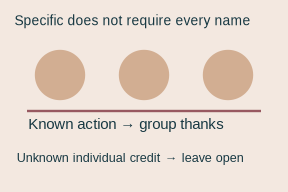
You can be specific about help you received while remaining uncertain about who provided each part. Describe the action you actually observed, address the group you can identify and leave invented individual credits out of the note. The following exchange is fictional.
Separate the known detail from the missing names
Known: the reception team kept a folder ready for a late arrival and explained where the meeting was taking place. Unknown: which person assembled the folder and whether somebody stayed late. “Thank you for sacrificing your evening” would add an unsupported story. “Thank you for having the folder ready” stays with the observed help.
- Choose an honest addressee: use the team or group name you know. Ask a genuine contact how to address the note if even that is uncertain; do not guess a name from an unrelated directory.
- Name one observed action: say what was prepared, explained or made possible. Specificity comes from the action, not from listing every person.
- Describe your own response: “I could find the room without rushing” is narrower than “You made the whole event a success.” Do not speak for all guests unless you are authorised to do so.
- Invite shared credit gently: ask the recipient to pass on the thanks to those involved, without asking for private staff details or making them responsible for a public acknowledgement.
A complete short note
To the reception team,
Thank you for having my folder ready when I arrived after the opening. The directions to the meeting room helped me join without interrupting the speaker. Please pass on my thanks to anyone else who helped prepare it.
Best wishes,
Alex
If a name is later supplied: “Thank you, Sam. I have now learned that you prepared the folder; I appreciated being able to settle in quickly.” Use that wording only after the contribution is confirmed. A follow-up is optional: the original group note does not need a fabricated list to be complete.
Final review: could a recipient recognise the action? Does the note add an unverified motive, cost or sacrifice? Does it disclose another person’s situation? Is any promised follow-up something you intend to do? Keep the two useful details and remove repeated praise. Purdue’s concise-writing guidance supports that final edit; the note and review procedure here are our own examples.