Good hospitality is often a sequence of small decisions: checking an arrival time, making space at a table, remembering a food preference, or letting the conversation wander. Thank the part you noticed. A host does not need an elaborate report on the evening, and your note need not promise a return invitation you cannot arrange.
After dinner
“Thank you for dinner last night. I loved having time to catch up around your table, and the relaxed evening was exactly what I had hoped for.” If you mention the food, use a real detail. If you did not enjoy a dish, you can still appreciate the invitation without giving false praise.
For a birthday dinner: “Thank you for planning my birthday dinner. Bringing that little group together made the evening feel personal, and I loved that we could actually hear one another talk.” For a restaurant meal a friend paid for: “Thank you for treating me to dinner. I enjoyed the conversation as much as the food, and I appreciated the generous birthday surprise.”
After a great evening
Thank you for a lovely evening. The unplanned conversation over tea was my favorite part. It was good to spend time together without rushing to the next thing. I came home glad we had made the plan.
An everyday text can be shorter: “Thanks for tonight. Good company, a ridiculous game, and plenty to laugh about—I had a lovely time.” Keep the details appropriate to the relationship. Do not imply intimacy just because the note is about “last night.”
After a weekend stay
Mention a practical kindness as well as a memory: “Thank you for having us this weekend. Leaving breakfast things out made our early start easy, and the walk by the river was a highlight. We appreciated feeling at home.” Before leaving, ask what you can tidy; do not secretly reorganize your host’s cupboards in the name of helping.
For a warm welcome
When joining a family, team or neighborhood, explain what eased the unfamiliar situation. “Thank you for introducing me to everyone and explaining how the day would work. Having a familiar face to find made arriving much easier.” A welcome message need not announce that you already feel part of a close family if that is not how you feel.
A professional guest note
“Thank you for inviting me to the reception. I appreciated meeting the project team and hearing more about the work discussed in the opening session. Please pass my thanks to the colleagues who organized the evening.” Leave out personal details from conversations unless the people involved expect them to be shared.
An offer to return the kindness
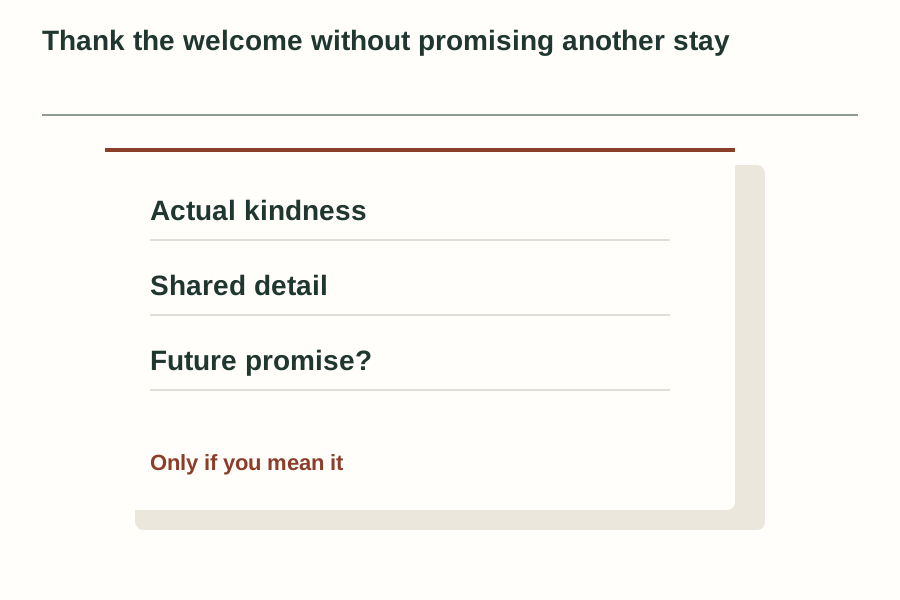
Specific and manageable beats grand and vague. “I would love to have you over for a simple lunch next month; I will send a couple of dates” is useful only if you intend to follow up. If you cannot host, you can say “I look forward to seeing you again” without turning the thank-you into a debt.
A final privacy check
If you are posting a group photograph, ask first. A host’s address, private room, meal or guest list is not automatically public just because you were invited. The thoughtful detail belongs in the direct note unless everyone is comfortable sharing it.
Visual field note

Read the diagram as text
- Invite: What you appreciated
- Detail: One shared moment
- Close: A realistic next connection
Make it your own: Build a note from two real details in the local worksheet.